

Double Wall Stove Pipe
Safer, More Efficient Wood Stove Venting
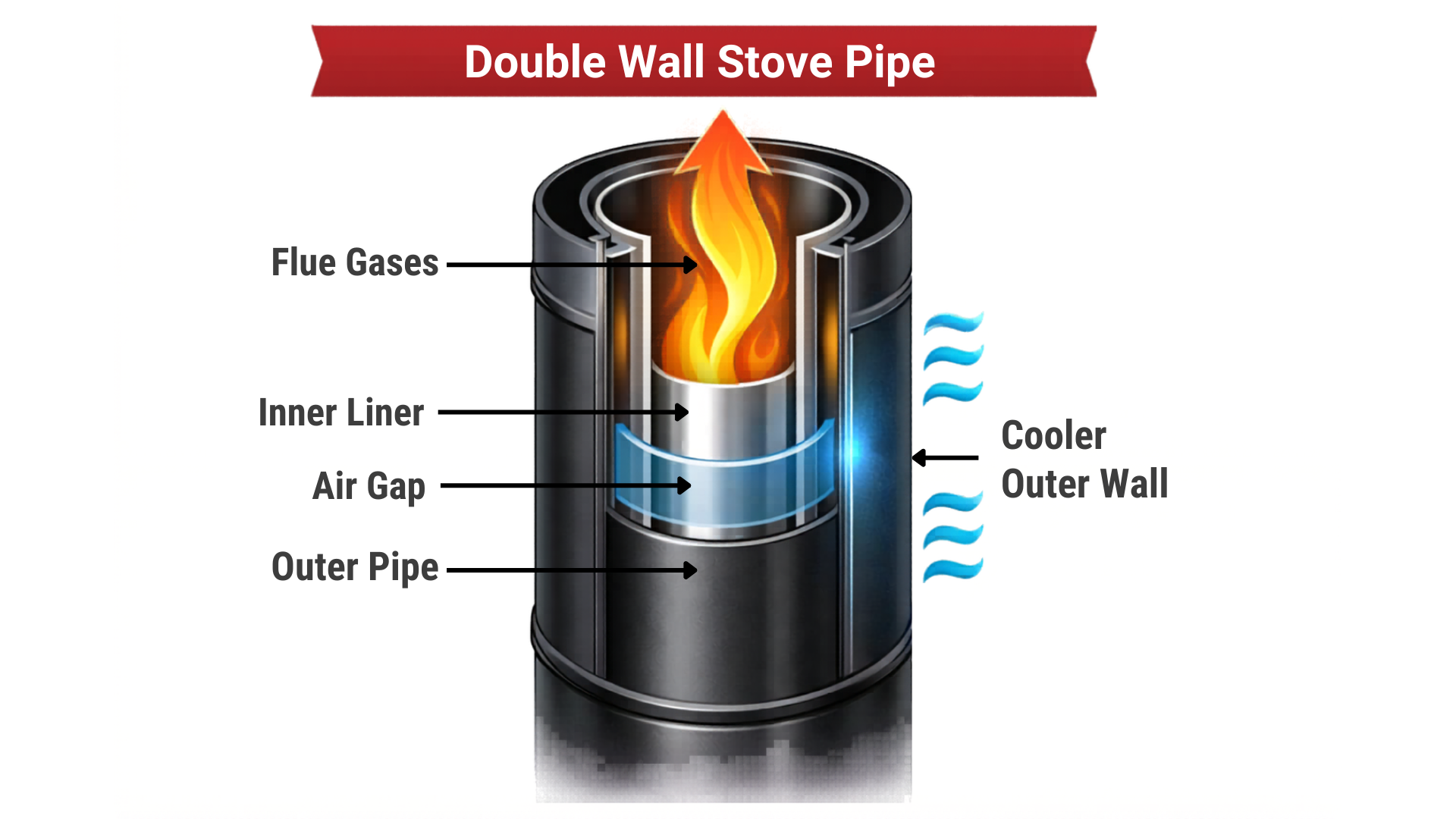
Our selection of double wall stove pipe includes high-quality connector pipe designed for safe wood stove installations. Double wall pipe features an insulated air gap between two layers of steel that keeps flue gases hotter while reducing surface temperatures. This improves chimney draft, reduces creosote buildup, and allows installations closer to combustible walls than single wall pipe.
Available in common sizes like 6 inch, 7 inch, and 8 inch stove pipe, these components help you build a reliable venting system from the stove to the chimney. Choose from straight pipe sections, adjustable telescoping pipes, elbows, and adapters to fit your installation.
6" DuraVent Double Wall Stove Pipe
6" Selkirk Double Wall Stove Pipe
8" DuraVent Double Wall Stove Pipe
8" Selkirk Double Wall Stove Pipe

Clearances of 6" for walls, 8" for ceilings
Installation Instructions

6" clearance to combustible materials
Installation Instructions
Double wall stove pipe is designed for interior use as the connector between a wood stove and the chimney system. DuraVent DVL and Selkirk DSP keep flue gases hotter than single wall pipe while allowing reduced clearances to combustible materials. Always follow the clearance and installation requirements for the specific stove and pipe system being installed.
Benefits of Double Wall Stove Pipe
Reduced Clearance to Walls
One of the biggest reasons homeowners choose double wall stove pipe is reduced clearance to combustible materials. In many installations, double wall connector pipe can be installed closer to the wall than single wall pipe, making it ideal for tighter hearth spaces, finished rooms, basements, cabins, and mobile home applications where every inch matters.
Stronger Chimney Draft
Because double wall stove pipe keeps flue gases hotter, it helps smoke and exhaust rise more efficiently through the vent system. Better draft can improve stove startup, reduce smoke spillage into the room, and support steadier stove performance during use.
Less Creosote Buildup
Creosote forms when smoke cools and condenses inside the pipe and chimney. By helping maintain higher flue temperatures, double wall stove pipe can reduce the conditions that lead to heavy creosote accumulation. That contributes to a cleaner venting system and safer long-term operation.
Cleaner-Looking Installation
Double wall stove pipe often gives a more finished appearance in living spaces. Its clean black outer wall works well in modern and traditional stove installations alike, making it a popular choice when the pipe run is visible in the room.
Longer Service Life
The inner wall of double wall stove pipe is designed to handle higher temperatures and continuous flue gas exposure. With proper installation, operation, and regular chimney maintenance, double wall pipe can offer long-lasting performance.
Double Wall vs Single Wall Stove Pipe
Both double wall and single wall stove pipe are used to connect a stove to the chimney system, but they are not the same. Single wall pipe is often more affordable and radiates more heat into the room, but it requires larger clearances to combustible materials and allows flue gases to cool faster. Double wall stove pipe costs more, but it offers better draft, lower creosote risk, and reduced clearance requirements.
| Feature | Double Wall Stove Pipe | Single Wall Stove Pipe |
|---|---|---|
| Construction | Two walls with air space | Single wall steel |
| Draft Performance | Better | Good |
| Creosote Buildup | Reduced | More likely |
| Clearance to Combustibles | Reduced | Larger clearance needed |
| Heat Radiation Into Room | Less | More |
| Best For | Tighter and higher-performance installations | Larger open spaces and budget setups |
When Should You Use Double Wall Stove Pipe?
Double wall stove pipe is often the best choice when your stove is installed closer to a wall, when you want stronger draft performance, or when your stove manufacturer recommends it. It is also a popular upgrade for homeowners replacing older single wall pipe and trying to improve both safety and appearance.
• Wood stoves installed in smaller rooms• Installations with tighter wall clearances
• Homes where draft performance is important
• Visible pipe runs in finished living areas
• Modern EPA stove setups that benefit from hotter flue temperatures
Choosing the Right Stove Pipe Size
6 Inch Double Wall Stove Pipe
6 inch double wall stove pipe is the most common size used for residential wood stoves. Many modern stoves use a 6 inch flue collar, making this the standard size for a wide range of installations. If your stove has a 6 inch outlet, your connector pipe should match it unless the stove manufacturer specifically states otherwise.
7 Inch and 8 Inch Double Wall Stove Pipe
Some larger wood stoves require 7 inch or 8 inch stove pipe. Always match the diameter of the pipe to the stove's flue collar and venting requirements. Reducing pipe size without manufacturer approval can lead to poor draft and unsafe operation.
Before ordering, confirm your stove outlet size and the brand compatibility of the double wall pipe you are using. Connector pipe components are often brand-specific and should not be mixed unless the manufacturer allows it.
Common Double Wall Stove Pipe Components
Straight Pipe Sections
Straight sections are used to build the main vertical run from the stove toward the ceiling support box or wall thimble.
Telescoping Pipe
Telescoping double wall stove pipe makes installation easier by allowing you to adjust pipe length without cutting. It is especially useful when trying to fine-tune stove-to-ceiling height.
Elbows
Elbows help route the pipe around obstacles or into an existing chimney entry point. Use only the angles and configurations approved for your stove and venting system.
Adapters and Increasers
Adapters connect the stove collar to the pipe system or transition from stove pipe to chimney components. Be sure each adapter matches the pipe brand and connection style you are using.
Stove Pipe vs Chimney Pipe
Double wall stove pipe is not the same as insulated chimney pipe. Stove pipe is used only in the room to connect the stove to the chimney support system. Once the venting system passes through a wall, ceiling, attic, or roof, it must transition to the proper insulated chimney pipe designed for that purpose.
A typical venting system looks like this:
Wood Stove
↓
Double Wall Stove Pipe
↓
Ceiling Support Box or Wall Thimble
↓
Class A Chimney Pipe
↓
Chimney Cap
Double Wall Stove Pipe Installation Tips
Always follow the instructions for your stove and the stove pipe brand you are installing. Proper fit, clearances, and component compatibility matter. A safe system depends on more than choosing the right diameter.
• Match the pipe diameter to the stove flue collar• Follow the manufacturer’s required clearances
• Use the correct adapter for the stove collar and pipe brand
• Transition to chimney pipe at the proper support box or wall pass-through
• Inspect and clean the system regularly
Frequently Asked Questions About Double Wall Stove Pipe
What is double wall stove pipe?
Double wall stove pipe is a connector pipe used between a wood stove and the chimney support system. It has two layers of metal with an air space between them to help keep flue gases hotter and outer pipe temperatures lower than single wall pipe.
Is double wall stove pipe better than single wall?
Double wall stove pipe is often the better choice when you need reduced wall clearances, stronger draft, and less creosote buildup. Single wall pipe can still be useful in some installations, but double wall pipe is commonly preferred for tighter or more performance-sensitive setups.
How close can double wall stove pipe be to a wall?
Clearance requirements vary by manufacturer, so always follow the installation instructions for the exact pipe brand and stove you are using. Double wall stove pipe generally allows reduced clearances compared to single wall pipe.
Can double wall stove pipe go through a ceiling or wall?
No. Double wall stove pipe is for interior connector use only. When the venting system passes through a ceiling or wall, it must transition to the appropriate insulated chimney pipe and support components.
Does double wall stove pipe reduce creosote?
It can help reduce creosote formation because it keeps flue gases hotter as they travel through the connector pipe. Hotter exhaust is less likely to condense into creosote than cooler exhaust.
What size double wall stove pipe do I need?
The correct size is the one that matches your stove's flue collar. Most wood stoves use 6 inch pipe, but some larger units require 7 inch or 8 inch stove pipe. Check your stove manual before ordering.
Can I mix brands of double wall stove pipe?
In most cases, double wall stove pipe components are brand-specific. It is best to use matching components from the same manufacturer unless compatibility is clearly stated.
What is the difference between stove pipe and chimney pipe?
Stove pipe connects the stove to the support box or thimble inside the room. Chimney pipe is the insulated venting system used once the run passes through a ceiling, wall, attic, or roof.

